
Sorters—Shipment Processing and Intralogistics Made Easy
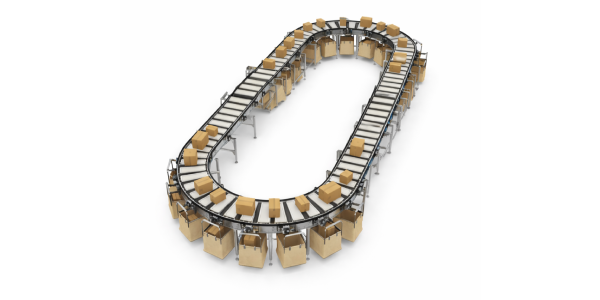
Simply put, sorters are smart intralogistics automation solutions used to automatically segregate loads (shipments, boxes, cartons, parcels, etc.) passing through their in-feed. The automation solution is primarily designed for 3PL facilities, logistics parks, warehouses, and e-commerce order fulfilment and distribution centres. In these facilities, thousands of shipments are processed every day based on their dimensions, dead weight, and destination code, i.e., the PIN Code to which the parcel is headed.
The goal of the segregation process is to gather loads with the same destination code (or range of PIN Codes/destination codes) encoded in their shipping ID into exclusive heaps.
Once sorted, it is easier for other autonomous material-handling solutions and warehouse workers to store these parcels together (the same or adjacent shelves/aisles), thereby simplifying the retrieval of outbound shipments.
Learn Why You Should Choose Sorters by Quinta
Is your warehouse throughput slowing down due to manual sorting? Are your warehouse workers still toiling to segregate shipments by scanning their destination code one by one? If yes, you are burning money and losing opportunities, as your early-adopter competitors are getting ahead.
This is where choosing Quinta as your tech partner could be game-changing.
Quinta, over the years, has emerged as one of the foremost solution-building and automation consulting firms in India and beyond. Conveyor sorting systems, as well as several other types of automatic parcel sorting systems, are one of our key specialisations.
- Do you have a challenge regarding square footage crunch, but urgently need a sorter? Our consultants and solution designers are there for you!
- Worried about throughput and sorting accuracy? That’s where our hardware and mechanics experts shine!
- Software integration a concern? Let our software mavericks work their magic!


Moreover, we have our in-house WMS and WCS software, which are not only customisable but also holistically designed to anticipate your workflow needs. The insights for developing the off-the-shelf features in our smart operations management software platforms come from our years of experience with manufacturers, 3PL and warehousing companies, logistics operations, and other industrial setups that require a wide range of automation solutions.
Why Quinta? Our expertise spans Edge Computing, AIDC, IoT and Machine Vision technologies, extending to end-to-end intralogistics solutioning as demonstrated by our DWS Systems, sorters, letter sorter machines, and other product lines. Give a quick start to your Digital Transformation efforts.
- Wondering about integration and installation services? Our team has done it countless times—we bring to the table technology experts, as well as their wealth of experience, gained through hours of trials, errors, and successes.
- Curious about longevity and life cycle management? To begin with, our engineering capabilities boast a sterling track record, thanks to both the top-notch core components used and our solution-building expertise, spanning from planning to installation.
It is equally important to consider that post-installation, our journey with you has only begun. Besides routine maintenance checks, our customer support team strives to address your concerns in the shortest possible turnaround time, ensuring that you minimise, if not eliminate, downtime!
Robust Automatic Parcel Sorting System Models by Quinta
Customised to Perfection, Engineered to Last, Built for Efficiency
Embrace some of the most robust models of our warehouse sorters, the backbone of a comprehensive automated material-handling system for inventory management, intralogistics, and outbound shipping.
In 1:2 Z-type sorters, 1 refers to the number of induction points into the sortation system and 2 to the number of chutes/bins. The same format applies to other sorter models.
Industries Served
3PL
Logistics Parks
Warehousing
E-commerce Order Fulfilment & Distribution Centres
Courier, Express, and Parcel (CEP)
Key Benefits of Quinta’s Automatic Parcel Sorting Systems
Elevate your operations today by mechanising the work performed by warehouse employees with the sorters best suited to your specific needs!
Conveyor sorting systems, used in manufacturing plants, and other sortation solutions like automated warehouse parcel sorting systems ensure the following:
- Smart, on-time load categorisation
- Higher load processing/hour
- Increase in overall throughput across the processes in the operations
Core Anatomical Features of Sorters
The solution combines elements of robotics and mechatronics, among other technologies. To build an efficient sorter, solution providers leverage machine vision cameras and robust technical capabilities, including mechanical, hardware-software integration, and Edge IoT hardware skills.
Hardware
In-feed
The touchpoint where the load is placed on the sortation system; in the case of Dynamic DWS Systems integrated with sorters, the in-feed is the same as that of the automated dimensioning and weighing solution
Carrying Surface/Carriers
The moving platform or container-like component used for transporting items across the sortation system, e.g., cross-belt conveyors and tilt-tray conveyors
Pusher/Actuator
The mechanism used to nudge the moving load into the bin, where a batch of shipments/products which have a similar item ID as per a pre-defined rule collect before moving to workflows that follow sortation
Diverter
The component, usually embedded on the carrying surface, directs the load to different sections of a multi-layered/ multi-loop warehouse sorter.
Tilts
An inclined plane attached to the sorter to transfer items to a different tier or loop of the sortation track.
Bin/Chute
The container where the sorted items land
PLC and the Controller Box
The edge IoT and computing component, which primarily relays the data captured by the solution’s sensors and encoder, among other components, to the WMS via the WCS over different network types
Encoder
An automated pulse counter connected to the carrying surface, measuring its displacement to help the PLC and thereby the WMS to learn about the positions of the load
Photo Eye/ Photoelectric Sensors
Light-based sensors which can detect the. presence of loads if they cross the beam; these sensors are placed near an actuator and at the entrance/mouth of the chute, or a few inches into the chute
Gap Controller
Short conveyors at the in-feed, controlling the gap between loads
Software
WMS (Warehouse Management System)
The centralised operations management software, which controls the tech ecosystem based on the platform’s AI models and user input
WCS (Warehouse Control System)
The middleware software, which manages the signals from various solutions to and from the WMS—analogous to the work of a traffic controller
Breathe intelligence into sorters and warehouse automation solutions with expert-led operations management software integration.
Discover How Sorters Function
The “sorting action”, i.e., the segregation of the load, occurs when the load, placed on a moving carrying surface—usually a conveyor belt—reaches the designated spot for the load, where the load is ejected into bins/chutes, assigned for shipments labelled with the same destination code(s).
This sorting action is triggered by actuators—mechanical, often motor-driven components that alter the load’s direction by nudging or sliding the load into the bin/chute.
Automating the segregation of parcels by destination codes, warehouse sorters fast-track operations by eliminating the need for workers manually sort individual loads from large heaps of shipments regularly arriving at 3PL, e-commerce warehouses, and other similar logistics-heavy operations. By speeding up this workflow, the sortation system empowers other autonomous material-handling solutions or workers to store shipments by their destination code with minimal or no operator oversight.
Step 1 of the Sortation Workflow—Processing and Bin Selection
- Before the load enters the automated parcel sorting system, it is processed leveraging a DWS (Dimensioning, Weighing, and Scanning) System, composed of profilers, load cells, and code-readers, which helps determine the following, respectively:
- Items’ L x B x H (dimensions) details
- Dead Weight of the packages/SKUs
- Shipping IDs encoded in the shipment labels; barcodes (1D/2D), QR Codes, laser/ machine-engraved codes, etc.
- Thanks to the IoT capabilities of the DWS System, the data captured by the integrated solution goes from its controller box to the WCS, and then via the WCS to the WMS.
- The WMS pairs the parcel’s destination code to a Chute ID mapped against the corresponding PIN Code cluster.
The centralised operations management software logs the data both for record-keeping and further decision-making in subsequent workflows. Processing the load helps streamline several processes, such as:
- Storage and retrieval
- Outbound logistics planning
- Intralogistics
- Sortation
Step 2 of the Sortation Workflow—The “Sorting Action”
The core sorting action can be primarily categorised into two scenarios:
Scenario 1: Integrated Dynamic DWS-Sorter Setups
Here sorting action is described step-by-step:
1. Right at the DWS infeed, the gap controller regulates the space between consecutive parcels.
2. The encoder counts the pulses of the conveyor movement, alerting the PLC of the conveyor’s displacement, and thus the position of the load on the conveyor.
3. Photo eyes located near actuators signal the PLC when a load crosses their beams.
4. Like the encoder counting conveyor movement pulse, the photoelectric sensors also confirm the location of the load. Together, they both create a two-step verification process for determining the loads’ positions.
5. The due sorting action for a particular shipment occurs when the inputs from these two steps confirm that the parcel is near the bin assigned for the Shipment ID.
6. After the PLC, thanks to its Edge Computing capabilities, ensures the timely trigger of the right actuator, the action is said to be completed when the shipment crosses the beam of the photo eye placed at the mouth of the chute.
Scenario 2: Independent Sorters
Integrated DWS-Sorting solutions don’t cut it for operations battling space crunch, but the sorting process, in this scenario, largely remains the same, except the gap controller and the label reader are placed at the in-feed of the sorting solution, instead of the DWS System’s.
Wonder why the popularity of warehouse automation solutions, such as sorters, has been rising dramatically in the last few years?
Join Hands with Quinta for Smooth Sorter Installation and Post-Sortation Workflows
Quinta ensures that its automated parcel sorting systems are not just built as modular, efficient, scalable solutions, but also built following engineering best practices, integrated by a robust collaboration between hardware and software experts, and serviced by a quick-response customer support team. Moreover, our expertise extends well beyond sorters.
Here is a comprehensive glimpse of our end-to-end warehouse automation capabilities, demonstrated via a fully automated post-sortation workflow:
The input from the DWS Solution (Static or Dynamic) helps identify a carrier with appropriate payload and volume.
The material-handling devices are assigned based on the item's dimensions and weight.
The material-handling solutions fetch the load from the bin to the next workstation.
Decoded product IDs enable quick item tracking, even down to the shelves in the storage unit.
Once located, the load is moved to the correct outbound workstation.
Opting for an Automated Sorting System? Don’t Forget to Account for the Following—
- Type of load processed, including factors such as structural integrity, dimensions, and deadweight, among others
- Layout of the solution, depending on the workflow and space available for installation
- Desired order processing speed—in other words, throughput
To discover the remaining key considerations,
