

Modern warehouse showing manual parcel handling alongside automated conveyor and AMR-based sorting systems.
The Throughput Ceiling: Why Manual Sorting Struggles at 2,000 PPH and the Reality of Automation Jam Rates
Published Date: October 30, 2026
Every warehouse starts fine with manual sorting.
A few hundred parcels a day. A few workers. A simple system.
Then the orders grow.
Soon the same warehouse is trying to move 2,000 parcels an hour through the same manual setup.
That is usually where things start to break.

This is not really about how hard the workers try.
It is about how a manual system works. People can only walk, read labels, and place boxes so fast.
Once volume crosses a certain point, mistakes go up, and speed goes down at the same time.
In this blog, we’ll explain why that happens, what automated sorting systems actually fix, and what they do not fix.
We will not pretend automation is perfect. It has its own problems too, and you deserve to know them before you invest.
Key Takeaways
Understand the throughput ceiling: Manual sorting becomes difficult when parcel volumes increase beyond what the existing workforce and setup can handle.
Recognise the impact of fatigue: Tired workers can make more mistakes, especially during long shifts and busy periods.
Know how automated sorting works: Scanners and control systems identify parcels and direct them to the correct sorting destination.
Choose the right sorting system: Cross belt, wheel and arm sorters use different mechanisms to move parcels into the correct chutes.
Understand that automation can jam: Damaged barcodes, oddly shaped parcels, and closely spaced packages can interrupt the sorting process.
Know where human intervention is still needed: Unreadable parcels and sorting exceptions still require manual checking.
Focus on consistency, not just speed: Automation helps maintain a steady sorting process without the same fatigue-related challenges faced by manual teams.
Evaluate before investing: Consider parcel volume, labour requirements, floor space, sorting accuracy and operating costs when choosing an automated sorting system.
Why Manual Sorting Falls Apart Past 2,000 Parcels an Hour?
Manual sorting involves several repetitive steps:
- A worker receives or picks up a parcel.
- The shipping label or barcode is identified.
- The parcel’s destination is determined.
- The worker moves it to the correct bin, chute or dispatch lane.
- The worker returns to handle the next parcel.
At lower volumes, this process can be manageable.
However, as parcel throughput increases, the time spent walking, identifying labels and moving packages starts adding up.

A growing warehouse may encounter several challenges:
1. Increasing Sorting Errors
When workers have to process large numbers of parcels under time pressure, the risk of misreading labels or placing shipments in the wrong destination area can increase.
2. More Floor Congestion
Additional workers do not always solve the problem. Limited aisle space, sorting stations and movement areas can create congestion and affect the overall workflow.
3. Workforce Fatigue
Repetitive handling, continuous movement and long shifts can affect worker concentration and sorting consistency.
4. Difficulty Maintaining Throughput
When parcel volumes fluctuate, a manual process may struggle to maintain consistent processing speeds without additional labour and operational adjustments.
The important point is that 2,000 parcels per hour is not a universal limit for every manual sorting operation. It is a useful high-volume scenario for understanding how labour, layout and process constraints can affect sorting performance.
For growing warehouses, the question becomes: how can the sorting process handle increasing volumes without creating additional operational bottlenecks?
What Are Automated Sorting Systems?
Automated sorting systems are machines that read, decide, and move each parcel.
An automated sorting system uses a series of conveyors, barcode scanners, control systems, and sorting devices to identify parcels and send them to their correct destination.
The system reduces the need to manually sort and read labels.
A standard automated parcel sorting process will consist of:
- Induction :Packages are introduced into the conveyor/sorting system.
- Barcode scanning : The barcode scanner reads information about the parcel.
- Destination: The control system identifies where the parcel should be sent.
- Automated diversion: The sorting device sends the parcel to the correct chute/lane.
- Exception sorting: If the parcel can’t be identified or sorted it will be sent to an area for manual inspection based on how the system is set up.

Types of Automated Sorting Systems Used in Warehouses
Different warehouse operations require different sorting technologies. Parcel dimensions, weight, shape, throughput requirements, available floor space, and destination count all influence the selection.
Here are three commonly used sorting mechanisms.
1. Cross Belt Sorter
A cross belt sorter uses individual belt carriers mounted on a moving sorting loop.
Each parcel is assigned to a carrier. When it reaches the designated destination, the small belt on that carrier activates and transfers the parcel sideways into the appropriate chute or collection area.
Where it is useful:
- High-volume parcel distribution.
- E-commerce fulfilment operations.
- Courier and logistics hubs.
- Operations requiring multiple sorting destinations.
The suitability of a cross belt sorter depends on parcel characteristics, system configuration, and the required throughput.
2. Swivel Wheel Sorter
A Swivel wheel sorter uses angled or raised wheels inside the conveyor section.
When a parcel reaches a predetermined divert point, the wheels will be triggered and divert the parcel off the main conveyor into a specific lane.
Where it is useful:
- Distribution
- Sorting of parcels
- Products where a light or medium-weight package will work
- Conveyor lines that require control over diversion
- When a small sorting system is desired
- Consider the parcel size, basic nature, weight, and stability.
3. Swing Arm Sorter
A swing arm sorter uses a mechanical arm or pushing mechanism positioned beside the conveyor.
When the parcel reaches the designated sorting point, the arm moves to divert it towards the appropriate chute or lane.
Where it is useful:
- Applications requiring mechanical parcel diversion.
- Sorting lines with defined destination lanes.
- Suitable parcel mixes where a push-type mechanism meets handling requirements.
The mechanism must be selected according to the parcel’s dimensions, weight, packaging, and handling characteristics
The Part Most People Don't Tell You: Automated Sorting Systems Can Jam
Here is something most sales pitches skip.
Automated sorting systems are not perfect. They jam.

A jam usually happens for one of a few reasons. A barcode is torn or smudged and the scanner cannot read it.
A parcel is shaped oddly and gets stuck at a turn. Two parcels arrive too close together and overlap on the belt.
When this happens, the line does not always stop completely. Most modern systems are built to either send the unreadable parcel down a side lane for a person to check or hold it in a loop until it can be read again.
This means automation does not remove human work completely. It moves human work to a smaller, more focused job: fixing the exceptions the machine could not handle on its own.
The honest comparison is this. A well-run automated line has far fewer errors than a tired manual team working at peak speed. But it is not error-free, and anyone who tells you otherwise is not being straight with you.
What automation does give you is consistency.
A machine does not get tired at hour eight of a shift. Its error rate does not climb just because it is 4 PM and the dock is full.
That consistency, more than raw speed, is usually the real reason warehouses see fewer total errors after switching.
Manual Sorting vs Automated Sorting: What Is the Difference?
What Matters | Manual Sorting | Automated Sorting Systems |
Top speed | Drops sharply past 2,000 parcels/hour | Can sustain much higher volumes for long hours |
Error pattern | Rises with tiredness and pressure | Stays steady through long shifts; low jam/no-read rate instead |
Floor space needed | Needs aisles and room for workers to move | Needs space for the machine, not for people walking |
Cost over time | Labour cost grows directly with volume | Higher cost upfront; cost per parcel drops as volume grows |
Flexibility for new rules | Easy to retrain people on new sorting rules | Needs a system update, but applies instantly everywhere |
Why Warehouses Are Adopting Automation Right Now
This is not just a future trend. It is already happening.
Industry surveys show that 60% of companies are already using some form of conveyor and sortation system, with another 40% planning to add or upgrade these systems in the next two years.²
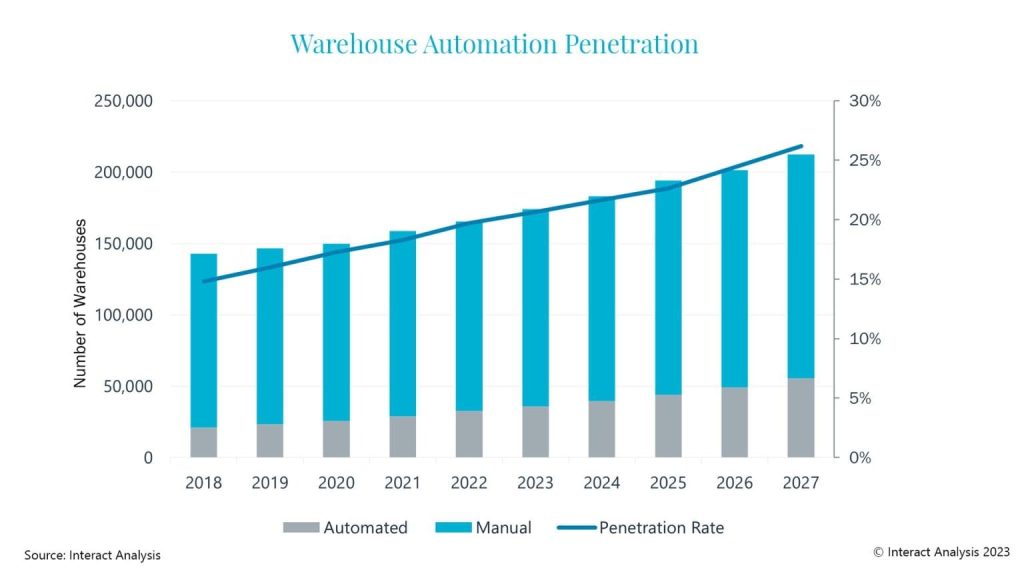
A big reason behind this shift is staffing, not just speed.
Warehouse worker turnover sits at around 36% per year in the United States, and replacing a worker can cost anywhere from a quarter to one and a half times their yearly pay.
That means a warehouse is not just fighting slow sorting. It is fighting a constant cycle of training new people who may leave within months.
An automated sorting system does not quit. It does not need three weeks to learn a new sorting rule.
This is why more operations, especially fast-growing e-commerce and parcel delivery companies, are treating automated sorting as a basic need, not a luxury upgrade.
How Should You Choose the Right Automated Sorting System?
Before selecting a warehouse sorting solution, consider these factors:
- Current and expected throughput: How many parcels must the operation process per hour, including peak demand?
- Parcel characteristics: What are the minimum and maximum dimensions, weight ranges and packaging types?
- Destination count: How many chutes, lanes or dispatch destinations are required?
- Available floor space: What layout can the facility accommodate?
- Integration requirements: Does the sorting system need to connect with barcode scanning, WMS, ERP or other operational systems?
- Exception handling: How will unreadable barcodes, irregular parcels, and jams be managed?
- Total cost of ownership: What are the equipment, integration, maintenance, energy and operating costs?
The best sorting technology is not necessarily the fastest one. It is the one that matches the warehouse’s parcel mix, throughput requirements, layout and operational goals.
Frequently Asked Questions
Manual sorting depends on people reading labels and walking parcels to the right place by hand, which slows down and gets less accurate as volume and tiredness increase. Automated sorting systems use scanners and machines to do this job non-stop, at a steady pace, with a small and predictable rate of jams or misreads instead of rising human error.
The biggest benefits are steady speed, fewer errors during long or busy shifts, and less floor space wasted on aisles for workers to walk through. Automated systems also make it easier to scale up during busy seasons without hiring and training a large temporary workforce.
Hiring more workers helps only up to a point, because manual sorting has a hard throughput ceiling caused by floor space and human fatigue, not just headcount. On top of that, high worker turnover means warehouses are often retraining staff constantly, while an automated system keeps running the same way every day.
They genuinely reduce total errors, mainly because they do not get tired, distracted, or rushed the way people do during a long shift. That said, they are not perfect — barcode misreads and jams still happen, so most systems include a small manual exception step to catch the few parcels the machine cannot sort on its own.
A throughput ceiling is the point where a sorting method — usually manual sorting — cannot handle any more volume without a sharp rise in errors and delays, no matter how many extra workers are added. For most manual operations, this ceiling appears somewhere around 2,000 parcels per hour, depending on the layout and parcel mix.
Most systems handle standard boxes very well, but flimsy poly bags, oddly shaped items, and very light or very heavy parcels need extra care in how the system is set up. This is usually solved by routing unusual parcels to a separate lane, either for a different sorting method or for a person to handle manually.
An automated sorting system uses conveyors, barcode scanners, control software and mechanical sorting equipment to identify parcels and direct them to assigned destinations. It reduces the need for workers to manually move every parcel and helps warehouses manage higher-volume sorting operations.
Manual sorting requires workers to identify labels, move packages and place them in the correct destination areas. As parcel volumes increase, walking time, workforce fatigue, floor congestion and the risk of sorting errors can affect overall throughput.
Common sorting technologies include cross belt sorters, wheel sorters and arm or push-type sorters. Each uses a different mechanism to divert parcels. The right option depends on parcel dimensions, weight, shape, required throughput and warehouse layout.
Yes. Automated sorting systems can experience jams due to damaged barcodes, irregular parcel shapes, closely spaced packages, conveyor transfer issues or mechanical faults. Proper system design, monitoring and exception-handling procedures help manage these situations.
The process depends on the system configuration. Unreadable parcels may be diverted to a manual inspection area, recirculated for another scan or handled through a defined exception process.
No. A cross belt sorter may suit high-volume operations with multiple sorting destinations, but its suitability depends on parcel characteristics, required throughput, available space, system cost and operational requirements.
Start by measuring the average and peak parcels processed per hour. Consider parcel arrival patterns, operating shifts, peak-season volumes, destination count and expected future growth. The system should be designed around realistic peak requirements rather than average daily volume alone.
No. Automation reduces repetitive manual parcel handling, but employees are still needed for monitoring, maintenance, exception handling and overall warehouse operations.

