

Table of Contents
5 Operational Benefits of a DWS System Beyond Freight Billing

Warehouse Automation Specialist, Quinta
Published Date: October 21, 2026
Freight billing accuracy may justify a DWS installation. The bigger opportunity is using parcel measurement data to improve warehouse decisions.
For warehouse managers, a Dimensioning, Weighing, and Scanning (DWS) system is often evaluated against a familiar problem: shipping charges that do not match the actual dimensions or weight of a parcel.
But that is only one use of the data.
When parcel measurements are associated with the right shipment or product record, they can also help warehouse teams investigate carrier charges, review packaging decisions, improve dimensional inventory data, and understand changing shipment patterns.
These benefits are not automatic. They depend on the DWS configuration, data quality, software integration, and the processes that use the information.
Here are five operational opportunities worth evaluating when considering a DWS system for your warehouse.
Reason 1: Identify Inventory Slotting Problems Caused by Incorrect Dimensions
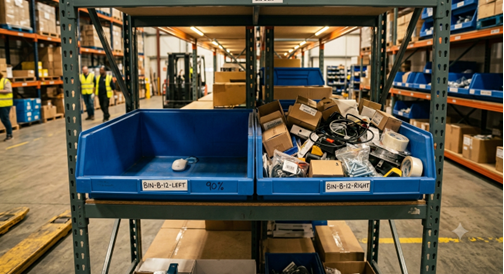
Warehouse slotting determines where products are stored and how much space they occupy. Incorrect product dimensions can undermine these decisions, particularly when SKU records are incomplete or outdated.
A product that is larger than its recorded dimensions may not fit its assigned location as expected. Inaccurate measurements can also affect calculations used to estimate storage capacity.
Where DWS data helps?
A DWS system can capture parcel dimensions and weight during processing. When those measurements can be reliably associated with the relevant SKU, they provide an opportunity to validate existing dimensional records.
Warehouse teams can then investigate discrepancies and update product data where necessary.
Example:
If the recorded dimensions of a frequently handled product differ from its measured dimensions, the warehouse can review its storage allocation and determine whether the current slot remains appropriate.
What needs to be in place:
A reliable way to identify the product, associate measurements with its SKU, and transfer the data into the relevant inventory or warehouse management workflow.
A DWS system does not independently optimize inventory slotting. It can provide more reliable dimensional inputs for the systems and teams responsible for those decisions.
Reason 2: Find Opportunities to Reduce Oversized Packaging
An oversized carton can consume unnecessary packaging material and increase the volume of a shipment. Depending on the carrier’s pricing rules, that additional volume can also affect dimensional-weight charges.
The problem is not always a lack of packaging rules. Sometimes the product data used by the packing system is inaccurate, or the available carton-selection logic does not reflect the actual dimensions of the order.
Where DWS data helps
Accurate dimensional data can support cartonization software when the appropriate product and order information is available.
This allows the packing system to evaluate carton options using measured dimensions alongside order contents, packaging constraints, and other relevant rules.
For warehouse managers, the useful question is not simply whether the DWS system measures parcels accurately. It is whether the resulting data can improve the decisions made at the packing station.
Example: A warehouse notices that certain orders repeatedly leave substantial unused space inside their cartons. Reviewing product dimensions and cartonization rules can help determine whether a better-fitting carton is available.
What needs to be in place: Compatible cartonization software, accurate product data, suitable carton options, and an integration that supports the intended workflow.
To evaluate the result, track carton utilization, packaging material consumption, or the proportion of orders requiring a carton-selection exception before and after changes are introduced.
Reason 3: Build Better Evidence for Carrier Billing Disputes
Over-boxing is one of the most common, least-tracked costs in fulfilment.
A packer chooses a box that is “close enough,” adds void fill to compensate, and ships it. The box is bigger than it needs to be, the DIM weight is higher than it should be, and the cost is quietly absorbed.
Cube-based slotting research shows that grouping and assigning items based on their actual physical dimensions — rather than estimated ones — directly reduces space wastage and improves how efficiently storage and packing decisions are made.
A DWS system feeds accurate item dimensions into the cartonization logic of the WMS. When the system knows the exact size of what is being packed, it can consistently recommend the right box — not just an acceptable one.

Reason 4: Make Returns Investigations More Evidence-Based
Returns teams often need to establish whether a parcel contains the expected product and whether its condition or contents require further investigation.
When the original dispatch information is difficult to access, staff may have to rely on manual checks and incomplete records.
Where DWS data helps
If the original shipment’s measurements and identification details are retained, they can provide a reference during returns processing.
A difference between the outbound and returned parcel’s recorded weight or dimensions may indicate that the package needs closer inspection.
Example: A returned parcel weighs considerably less than the original outbound shipment. The discrepancy can prompt the returns team to inspect the contents and review the associated return documentation.
However, weight differences alone do not establish that an item is missing. Packaging changes, product condition, and other factors may explain the difference.
What needs to be in place: Accessible outbound records, reliable shipment identification, and a returns process that allows the team to compare the relevant information.
The aim is to help staff identify exceptions that deserve investigation, rather than treat measurement data as conclusive proof of a returns discrepancy.
Reason 5: Improve Peak-Season Planning With Measured Shipment Data
Warehouse capacity planning often involves estimating how many parcels will move through the operation, which carton sizes will be required, and how shipment profiles may change during busy periods.
Historical shipment counts are useful, but volume alone does not describe the physical characteristics of the parcels being processed.
Where DWS data helps
Over time, a DWS system can provide records of parcel dimensions, weight, and shipment identification. When these records are stored consistently and made available for analysis, warehouse teams can examine patterns in the parcels they handle.
For example, the data may help answer questions such as:
- Which parcel size ranges occur most frequently?
- How does the shipment profile change during busy periods?
- Are certain shipment categories associated with higher dimensional weights?
- Which carton sizes account for a substantial share of packing activity?
Example: Before the next peak season, a warehouse reviews historical parcel measurements and identifies a recurring increase in large shipments during a particular period. The team can use that information, alongside order forecasts and other operational data, to review carton availability and packing capacity.
What needs to be in place: Sufficient historical data, consistent records, reporting capability, and other planning inputs such as order forecasts and staffing requirements.
DWS data can strengthen planning decisions, but it does not replace demand forecasting or capacity planning software.

How to Measure Whether These Benefits Are Realizing Value
Installing a DWS system is not the same as achieving every potential operational benefit. Warehouse managers should define the intended outcome, establish a baseline, and measure the result after the relevant workflow is implemented.

| Operational Objective | What to Measure | What to Verify |
|---|---|---|
| Improve inventory slotting | Dimensional data discrepancies and slotting exceptions | Measurements mapped to the correct SKUs |
| Review carton selection | Carton utilization and packaging material consumption | Data reaches the cartonization workflow |
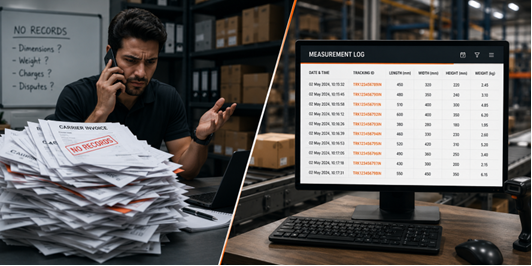
| Investigate carrier charges | Dispute investigation time and available shipment records | Measurements traceable to individual shipments |
| Support returns verification | Time spent investigating flagged returns | Outbound records can be retrieved and compared |
| Strengthen peak-season planning | Parcel size distribution and volume trends | Historical data is complete and available for reporting |
Frequently Asked Questions
What are the main operational benefits of a DWS system?
Does a DWS system automatically improve warehouse efficiency?
Does a DWS system need WMS integration?
Can a DWS system help reduce packaging costs?
How can DWS data support carrier billing disputes?
What should a warehouse measure after installing a DWS system?
References
About Author
Stephen Athokpam is a Warehouse Automation Specialist at Quinta, covering high-speed sortation systems, material handling tech, and distribution center optimization.

