
Table of Contents
A Normal Tuesday at a Footwear Warehouse
Picture a mid-sized warehouse that ships shoes and apparel.
Nothing unusual. A few thousand orders go out every day.
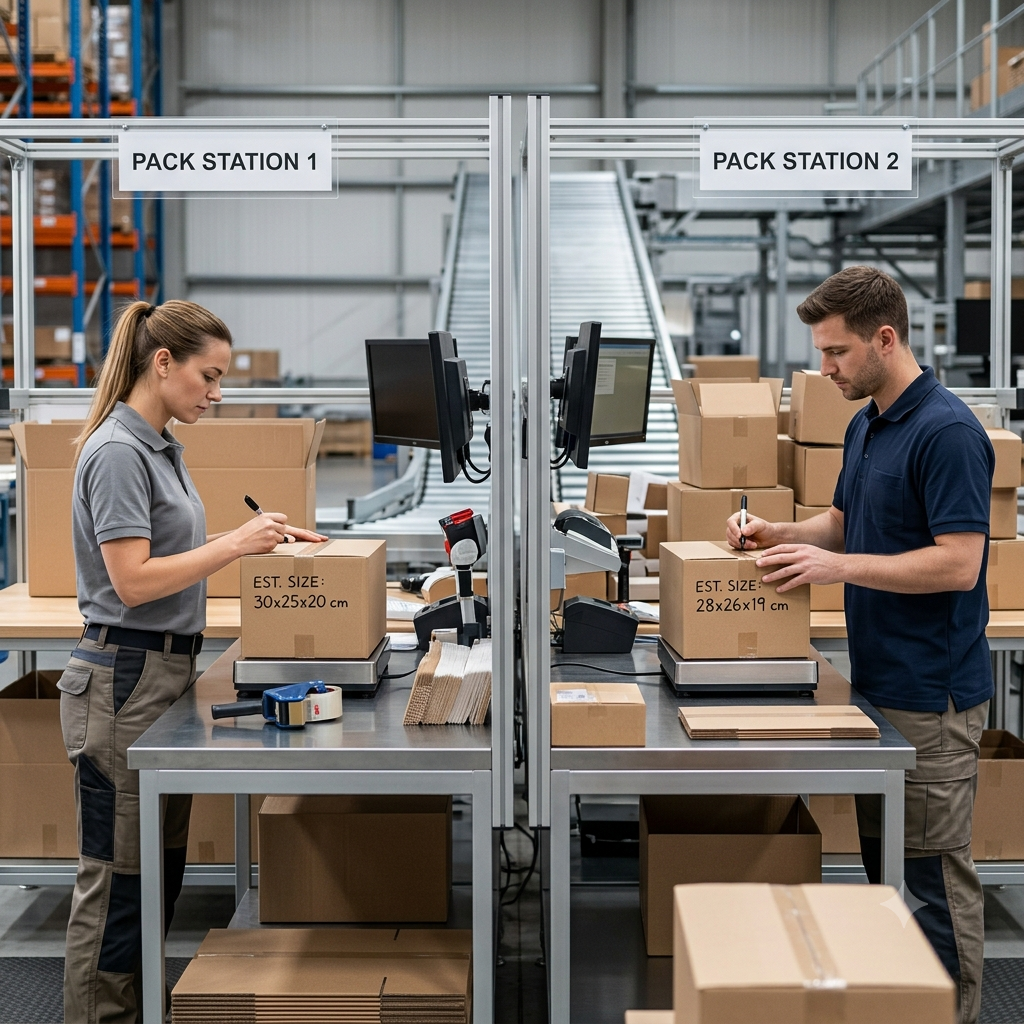
At the pack station, a worker places each item in a box or poly bag, seals it, and writes down the size by hand or picks the closest size from a list on the screen.
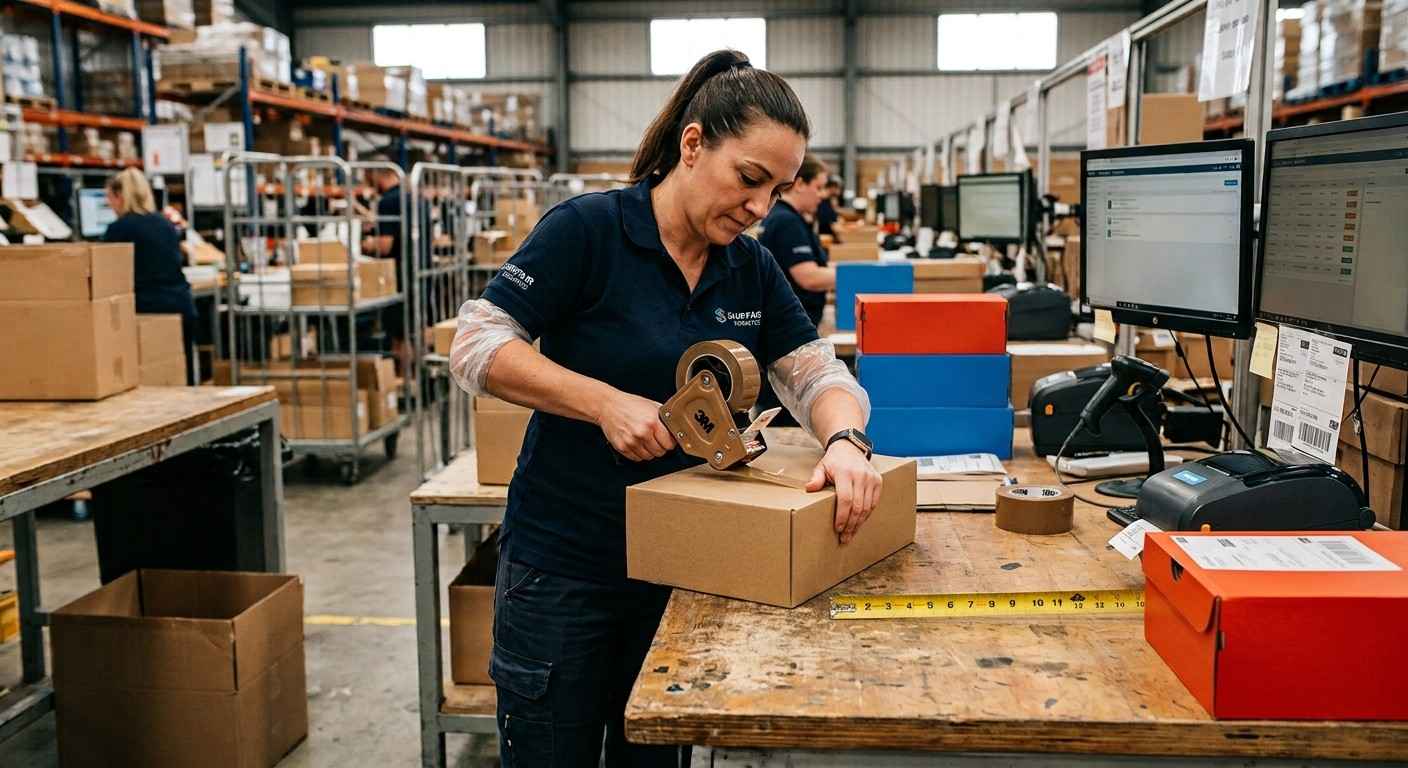
For a standard shoebox, this is easy. The size barely changes from order to order.
But not every order is a standard shoebox.
Some are soft poly bags with a folded t-shirt inside. Some are oddly shaped boxes for boots. Some are two items packed into one slightly bigger box than usual.
In each of these cases, the worker is estimating, not measuring.
And that small habit, repeated thousands of times a day, is where the real story of this blog begins.
What Actually Happens to These "Close Enough" Numbers
Every parcel that leaves a warehouse gets billed by a carrier.
That bill is not based on weight alone. It is also based on size, because a large, light box still takes up space on a truck or plane.
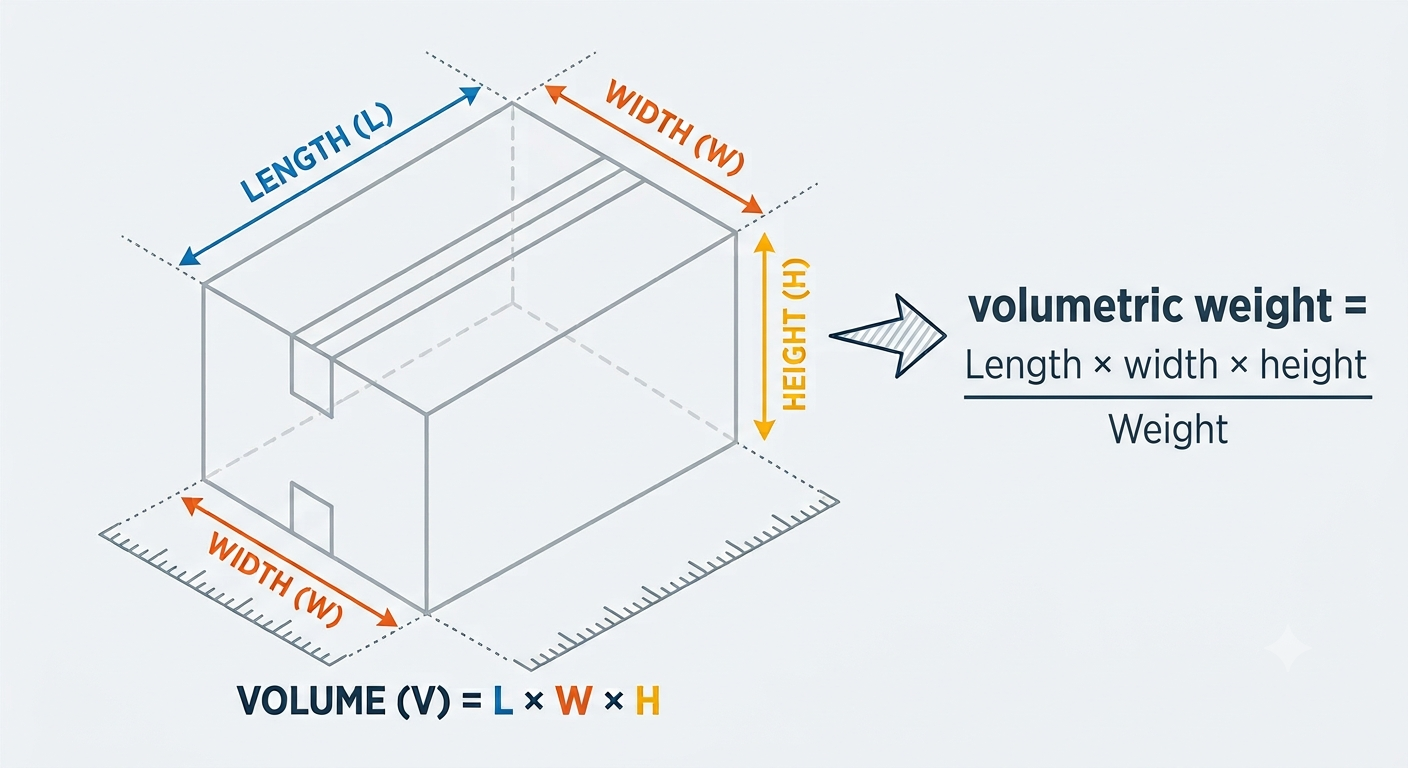
This is called dimensional weight, or DIM weight. The carrier compares the actual weight of the parcel to its dimensional weight, and bills whichever number is higher.
So if a worker rounds a box down from 32 cm to 30 cm because it is faster to write a round number, that small shortcut quietly changes the bill.
One box, rounded down by a couple of centimetres, barely matters.
But this same shortcut happens across hundreds of parcels a day, every day, for months.
This is exactly the kind of problem that legal metrology bodies have spent decades writing rules about.
As the International Organization of Legal Metrology explains, small measurement errors usually cancel each other out over many readings, but errors that lean the same way every time create real financial harm over time.¹
That second kind of error, the one that leans the same way every time, is exactly what happens when tired workers round down instead of rounding up. It is not random. It is a pattern.
And patterns, repeated at scale, turn into real money.
The Real Problem: This Is a Revenue Problem, Not Just an Operations Problem
It is tempting to treat this as a small operational hiccup. A worker being a little careless. Nothing serious.
But look at what is actually happening underneath.
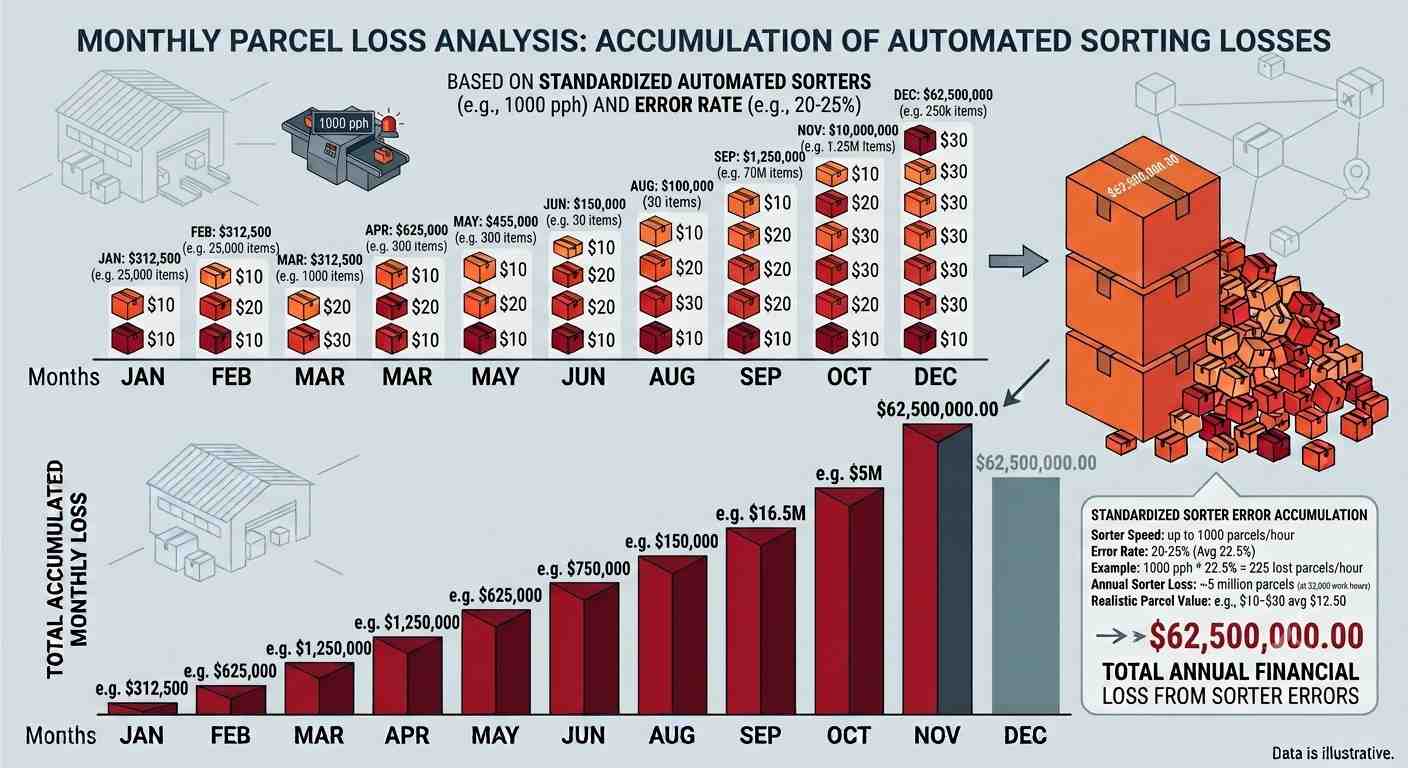
Every time a parcel’s dimensions are under-recorded, the warehouse bills its customer based on the wrong, smaller size.
Later, the carrier scans the same parcel with its own automated equipment at a sorting hub. That equipment does not round anything. It measures exactly.
If the carrier’s number is bigger than what the warehouse charged, the carrier bills the difference back to the warehouse.
This means the warehouse is not just making a small mistake. It is paying for that mistake twice. Once by undercharging the customer, and again by getting re-billed by the carrier later.
For a warehouse shipping a simulated 4,000 parcels a day, even a modest pattern of under-measurement on a portion of those shipments can translate into a meaningful, recurring monthly cost. ⚑
That number is not small once you multiply it across a full year.
This is the part that rarely shows up in daily operations meetings, because nobody is watching for it in real time.
It shows up weeks later, buried inside a carrier invoice, as a long list of “adjustment” line items that finance has to sort through one by one.
What We've Seen Across Real Warehouse Floors
Having worked closely with warehouse and fulfilment teams on exactly this kind of problem, a few patterns show up again and again.
The error is almost never random. It leans one direction.
Workers under time pressure round down far more often than they round up, because a smaller number is quicker to estimate and rarely gets questioned on the floor.
Different shifts measure differently.
A morning shift and a night shift, measuring the exact same product line, will often record different average dimensions.
Nobody planned this.
It just happens when measurement depends on a person’s judgement instead of a fixed process.
The dispute process is slow and mostly invisible.
By the time a carrier’s adjustment invoice arrives, the parcel is long gone.
There is no record of what it actually looked like at the pack station, so there is nothing to compare the carrier’s number against.
The warehouse usually just pays it.
Nobody owns this problem directly.
Operations blames it on packing speed targets.
Finance sees it only as a confusing invoice line.
Because it sits between two teams, it often does not get fixed by either one.
This is the quiet, repeating pattern behind most of the “mystery” carrier charges that finance teams complain about every month.
The Solution: Measuring It Once, Correctly, Every Time
The fix for this is not asking workers to measure more carefully.
People get tired.
Pressure does not go away during a busy week. Asking for more care is not a real fix.
The real fix is removing the guesswork from the process entirely.
A parcel dimensioning system, often called a DWS system (short for Dimensioning, Weighing, and Scanning), does this automatically.
As a parcel moves past the scanner, the system captures its exact length, width, height, and weight in a fraction of a second.
No rounding. No “close enough.” No difference between a tired worker at 6 PM and a fresh one at 9 AM.
This is where Quinta’s role in this story becomes relevant.
Quinta works with warehouses to set up parcel measurement systems that sit directly in the outbound flow, so every parcel is measured the same exact way, every single time, without slowing down the line.
The system captures the data and feeds it straight into the warehouse’s billing and shipping software, so the number used for the customer invoice is the same number the carrier will eventually use too.
This closes the gap that caused the problem in the first place.
There is no longer a difference between “what we billed” and “what the carrier measured,” because both numbers now come from the same accurate source.
It also creates something the warehouse never had before: a timestamped, recorded measurement for every parcel.
If a carrier ever disputes a bill, there is now an actual record to check it against, instead of just paying the difference and moving on.
This is not a small efficiency upgrade.
It is the difference between guessing at your own revenue every month and actually knowing it.
If your team has been quietly absorbing carrier adjustment charges without fully knowing why, this is usually where the answer is hiding.
Have Some Questions?
Incorrect parcel dimensions usually cost a business twice: once through undercharging the customer based on a smaller, estimated size, and again when the carrier re-measures the parcel and bills the difference back to the warehouse. Over thousands of shipments a month, this pattern adds up to a real and recurring cost, even though each individual mistake looks small on its own.
Most warehouse measurement errors come from manual estimation under time pressure, especially with irregular items like poly bags, oddly shaped boxes, or mixed-item parcels that don't fit a standard size. Because the estimation depends on a person's judgement in the moment, the same product can get measured differently depending on who is packing it and how busy the shift is.
The most reliable way to reduce parcel measurement errors is to automate the measurement step itself, using a parcel dimensioning system that captures size and weight as the parcel moves through the line. This removes the need for a worker to estimate anything, which means accuracy improves without adding any extra time to the packing process.
No, any warehouse shipping a meaningful volume of parcels can be affected by this problem, since the cost comes from a repeating pattern, not a one-time mistake. Smaller operations may see a smaller total cost, but the percentage of revenue lost to measurement errors can be just as significant relative to their size.
It prevents disputes by creating one single, accurate measurement that is used for both the customer invoice and the shipment record, instead of two different numbers from two different sources. If a carrier ever questions a charge, the warehouse has its own timestamped measurement on file to check the claim against, rather than simply accepting whatever the carrier says.

